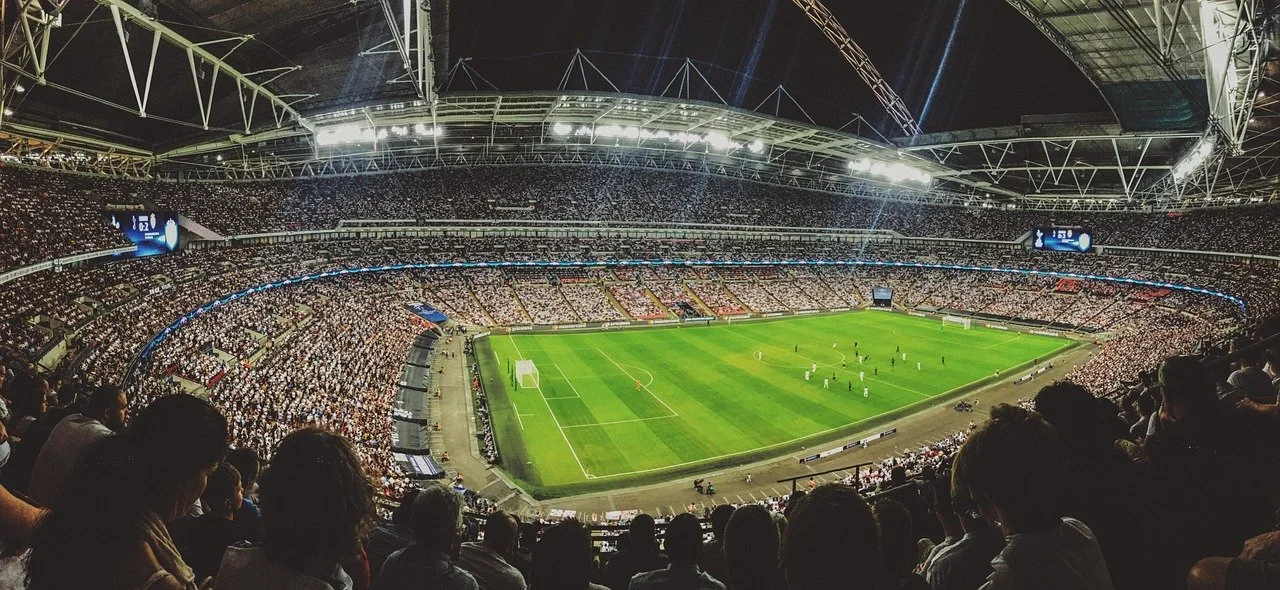
Last summer, the Copa América soccer final in Miami came dangerously close to catastrophe. A massive crowd of unticketed fans pushed through security barricades, injuring law enforcement officers and attendees and resulting in dozens of arrests. A subsequent after-action report identified the core failure: security teams simply did not have advance intelligence that tens of thousands of people had coordinated plans to rush the gates. The incident was a stark reminder that even well-staffed events can be overwhelmed when situational awareness breaks down.
Incidents like that one are driving a fundamental rethinking of how large-scale events are secured. From music festivals and sporting events to political rallies and corporate conferences, event security professionals are increasingly turning to artificial intelligence as a force multiplier — a way to extend the reach of human teams and give them the advance warning and real-time clarity they need to stay ahead of developing threats.
What AI Brings to the Table
The most impactful application of AI in event security right now is crowd management. AI-powered surveillance systems process video feeds from multiple cameras simultaneously, creating real-time heat maps of crowd density and movement. These systems don't just describe what is happening — they predict where bottlenecks, surges, or dangerous concentrations are likely to develop, giving security teams precious minutes to act before a situation escalates. At India's Maha Kumbh Mela, one of the world's largest gatherings, AI monitoring of crowd density across the entire site enabled automated interventions — opening additional exits, dispatching staff, redirecting attendees — that helped prevent major incidents despite the enormous scale of the event.
Beyond crowd dynamics, AI surveillance excels at detecting specific threat indicators. Integrated weapon-detection algorithms can identify guns and knives in video feeds in real time. Behavioral analytics flag individuals who are exhibiting patterns associated with pre-attack surveillance — repeated attempts at restricted access points, unusual loitering near entry and exit routes, or erratic movement through a crowd. Object recognition can identify unattended bags that may represent explosive threats. In each of these cases, the AI does not replace human judgment; it delivers actionable alerts to trained personnel who can assess the situation and respond appropriately.
The Human Element Remains Central
A consistent theme in discussions among event security professionals is the indispensability of human expertise alongside these technological advances. Ty Richmond, president of event services for Allied Universal, one of the country's largest security services firms, has noted that crowd management is without a doubt the most useful current application of AI — but that human personnel remain essential for interpreting alerts, managing escalations, and making the kind of contextual judgments that algorithms cannot replicate.
That human-technology partnership extends to training as well. Forward-looking security programs are now incorporating virtual reality simulations that place security personnel inside realistic crisis scenarios, allowing them to develop muscle memory and decision-making instincts before they ever face a real incident. AI-assisted training tools can then coach teams on real-time decision making during live events, helping personnel get better over time.
The Cyber-Physical Intersection
Modern events present security challenges that extend beyond the physical perimeter. The CrowdStrike outage in July 2024 left ticketing systems offline at the Australian Football League's Marvel Stadium, preventing fans from entering a sold-out match. A ransomware attack targeted computers at the Paris Grand Palais during the Olympics. These incidents illustrate that cyber threats and physical security threats are no longer separate domains — they intersect in ways that can have immediate consequences for the safety and operation of live events.
Event security in 2025 demands a unified strategy that accounts for both. The organizations that will protect crowds most effectively are those that invest in the integration between advanced AI tools, well-trained human teams, and robust cybersecurity protocols — understanding that a failure in any one of those layers can cascade into the others. The technology to do this well now exists. The imperative is making sure the people and policies are in place to use it wisely.
Sources
• Dark Reading – Companies Look to AI to Tame Chaos of Event Security
• SecurityInfoWatch – New Technologies Are Forging the Future of Event Security
• LiveGroup – How AI Is Shaping Event Security
• SentryPODS – AI Surveillance for Event Security